“You sure you want to cook that ribeye in a cast iron pan?” my friend asked, eyebrow raised as I carefully pulled out a thick, marbled steak from the fridge. Honestly, I’d been skeptical myself not long ago—trying to get that perfect crust without overcooking the inside seemed like an elusive dream. But that night, armed with nothing but a cast iron skillet and a slab of ribeye, I decided to test the reverse-sear method. The kitchen filled with the rich aroma of searing meat, and the sizzle was pure music. It wasn’t just cooking; it was a moment of quiet triumph amidst a hectic week.
What struck me most was how the compound butter I whipped up while the steak gently roasted added a silky, herby finish that made the whole experience feel special without any fuss. That ribeye—juicy, tender, with a crust that snapped just right—became my go-to comfort food, the recipe I reach for whenever I want to impress myself (and anyone lucky enough to share the meal). No fancy grill, no complicated gadgets—just a trusty cast iron skillet and a little patience. It’s funny how sometimes the best recipes come from simple moments like that, when you just want something honest and satisfying.
Since then, this perfect cast iron reverse-sear ribeye with compound butter has quietly settled into my rotation, a reminder that great food doesn’t need to be complicated. If you’re ready for a steak that feels like a celebration but cooks in your kitchen with ease, this recipe is worth a spot on your menu.
Why You’ll Love This Recipe
Over the years, I’ve made my fair share of steaks—some hits, some misses—but this reverse-sear ribeye recipe always delivers. Here’s what makes it stand out:
- Quick & Easy: The reverse-sear method takes about 45 minutes total, with most of the time hands-off, perfect for busy weeknights or when you want a special meal without the fuss.
- Simple Ingredients: No need for exotic spices or fancy equipment. Just a good ribeye, salt, pepper, and a few herbs for that compound butter—ingredients you likely have on hand.
- Perfect for Special Occasions: Whether you’re celebrating a quiet dinner in or hosting friends, this ribeye recipe impresses without stress.
- Crowd-Pleaser: Friends and family always ask for seconds. The compound butter adds a buttery, savory punch that keeps everyone coming back.
- Unbelievably Delicious: The reverse-sear technique lets you get that tender, evenly cooked interior paired with a crispy, flavorful crust. It’s comfort food with a gourmet twist.
What sets this recipe apart is the compound butter. I blend softened butter with fresh herbs like rosemary, thyme, and a hint of garlic, which melts over the steak, creating a luscious finish that feels indulgent but is super easy to make. This isn’t just another steak recipe—it’s a simple method that brings out the best in a ribeye and makes you feel like a steakhouse chef right in your own kitchen.
Honestly, one bite and you’ll get why I keep coming back to this recipe. It’s the kind of steak that makes you pause and just savor the moment.
What Ingredients You Will Need
This recipe uses straightforward, wholesome ingredients to bring out the natural richness of the ribeye, enhanced by the herbaceous compound butter. Most are pantry staples, and substitutions are easy if you have dietary needs or preferences.
- Ribeye Steak: 1 thick-cut ribeye, about 1.5 to 2 inches thick (roughly 12-16 oz / 340-450 g). Look for well-marbled meat for the best flavor and tenderness. I usually get mine from a local butcher or trusted brand like Snake River Farms.
- Salt: Kosher salt is best for seasoning the steak evenly and aiding in crust formation.
- Black Pepper: Freshly ground for that sharp, aromatic kick.
- Unsalted Butter: 4 tablespoons (about 57 g), softened—this forms the base of the compound butter. I prefer Plugrá for its creamy texture.
- Fresh Herbs: 1 teaspoon each of finely chopped rosemary and thyme. These herbs bring an earthy, fragrant element to the butter.
- Garlic: 1 clove, minced, adds a subtle pungency without overpowering.
- Olive Oil: 1 tablespoon for searing; use a light, high-smoke-point oil like avocado oil if you prefer.
- Optional: A pinch of smoked paprika or chili flakes for a bit of warmth in the compound butter.
If you want a dairy-free option, swap the butter with a plant-based alternative like vegan margarine, and substitute the olive oil with coconut oil for a slightly different flavor profile. For a gluten-free diet, this recipe is naturally safe, so no worries there.
Equipment Needed
- Cast Iron Skillet: The star of the show. Its ability to hold and evenly distribute heat makes it perfect for the reverse-sear method. I have a well-seasoned Lodge skillet that’s been my kitchen workhorse for years.
- Oven: Needed for gently bringing the steak up to temperature before searing.
- Instant-Read Meat Thermometer: Crucial for monitoring the steak’s internal temperature precisely. I use a ThermoWorks Thermapen for accuracy.
- Mixing Bowl: For preparing the compound butter.
- Spatula or Spoon: To mix and spread the butter.
- Wire Rack and Baking Sheet: For cooking the steak evenly in the oven without direct contact with the pan.
If you don’t have a cast iron skillet, a heavy stainless steel pan can work, but the results won’t be quite the same. For those on a budget, a smaller Lodge skillet is affordable and lasts forever if you take care of it—just avoid soap and always dry it thoroughly after cleaning.
Preparation Method
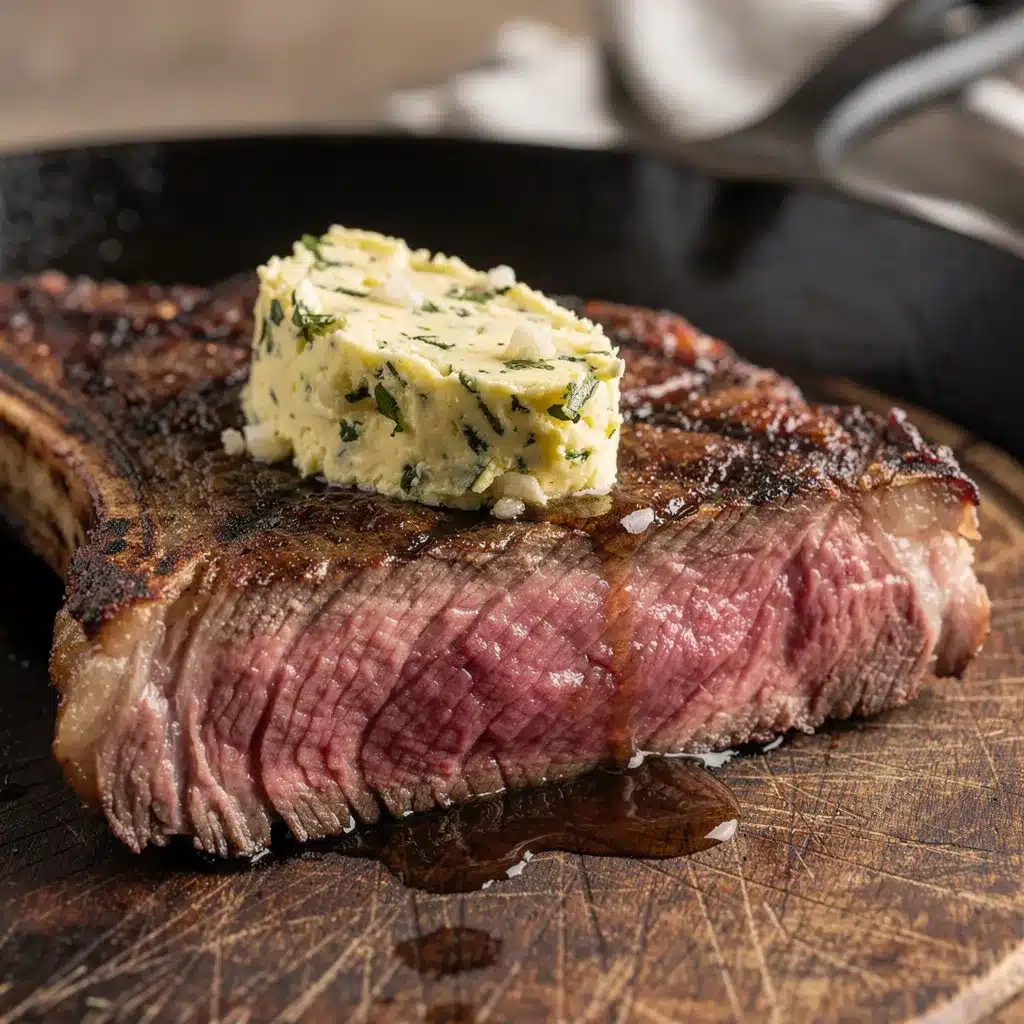
- Bring the Steak to Room Temperature (15-20 minutes): Take the ribeye out of the fridge and pat it dry. This step helps it cook evenly. Season generously on both sides with kosher salt and freshly ground black pepper. Don’t be shy; the salt will help form a beautiful crust later.
- Preheat the Oven to 275°F (135°C): Place a wire rack on a baking sheet—this setup prevents the steak from sitting in its own juices and promotes even cooking.
- Cook the Steak in the Oven (20-30 minutes): Place the ribeye on the wire rack and put it into the preheated oven. Use an instant-read thermometer to monitor the internal temperature. Aim for 115°F (46°C) for medium-rare, or adjust to your preferred doneness (see tips below). This slow, gentle cooking warms the steak evenly without overcooking the edges.
- Prepare the Compound Butter While the Steak Cooks: In a small bowl, mix the softened unsalted butter with chopped rosemary, thyme, minced garlic, and a pinch of smoked paprika if using. Stir until well combined and set aside.
- Heat the Cast Iron Skillet on High: Once the steak reaches the target temperature, remove it from the oven. Add olive oil to the pan and let it get smoking hot—this is key for that crispy, caramelized crust.
- Sear the Steak (1-2 minutes per side): Carefully place the ribeye in the skillet. Press it gently to ensure full contact. Flip after 1-2 minutes, or as soon as a deep brown crust forms. You can also sear the edges by holding the steak with tongs for 30 seconds each.
- Rest the Steak (5-10 minutes): Transfer the ribeye to a cutting board and let it rest. This helps juices redistribute and keeps the steak juicy.
- Add the Compound Butter: Spoon a generous dollop of the herb butter over the warm steak. Watch it melt and soak in—this is where the magic happens.
- Slice and Serve: Cut against the grain for the most tender bites. Serve immediately and enjoy the rich, buttery flavor married with that perfect crust.
Tips: If your steak hits the oven temp too fast, lower the heat slightly to avoid overshooting. The goal is a slow, steady rise. Also, using a thermometer really takes the guesswork out, so this is one tool worth investing in if you love cooking steak at home.
Cooking Tips & Techniques
The reverse-sear method is a game-changer, but there are a few tricks I learned the hard way. First, don’t skip the rest time after searing; it’s tempting to dig in right away, but resting lets the juices settle, so your steak stays juicy. Also, the skillet has to be seriously hot before you sear—if it’s lukewarm, you’ll end up steaming rather than crisping.
Seasoning early is another small but crucial step. Salting the steak about 20 minutes before cooking lets the salt penetrate and tenderize the meat. Don’t overdo the pepper before the sear, or it might burn and get bitter.
When mixing your compound butter, keep the butter cold but soft enough to blend easily. This balance makes it easier to shape or dollop on the steak later. If you want to prep ahead, you can roll the butter into a log in parchment and refrigerate it for up to a week.
Lastly, multitasking helps—while the steak is in the oven, whip up a quick salad or roasted veggies to go alongside. I often pair this ribeye with garlic mashed potatoes or even a fresh chimichurri for a flavor contrast.
Variations & Adaptations
This recipe is flexible enough to suit different tastes and dietary needs. Here are some variations I’ve tried:
- Spicy Compound Butter: Add finely chopped jalapeño or a pinch of cayenne for heat. It pairs wonderfully with the rich steak.
- Garlic & Herb Vegan Butter: Use a plant-based butter and swap fresh herbs for dried if fresh isn’t available. It’s a great option for dairy-free eaters.
- Alternate Cooking Method: If you don’t have an oven, try the traditional sear-first method but finish the steak over low heat on the stovetop, covered, for a similar effect.
- Seasonal Twist: Swap rosemary and thyme for sage and oregano in fall for a warmer herb profile.
- Different Cuts: Ribeye works best for its marbling, but you can use this technique on New York strip or filet mignon with adjusted cook times.
I once made a version with blue cheese mixed into the butter for a punchy, creamy finish—definitely not for everyone, but a hit with my adventurous friends!
Serving & Storage Suggestions
Serve this ribeye hot and fresh, right after resting and buttering. It’s ideal with simple sides that don’t compete—think roasted asparagus, a crisp green salad, or classic mashed potatoes. A bold red wine like Cabernet Sauvignon or a Malbec complements the richness beautifully.
If you have leftovers (not that it often happens!), wrap the steak tightly in foil or plastic wrap and store in the refrigerator for up to 3 days. To reheat, gently warm in a low oven (about 250°F / 120°C) until just heated through, then quickly sear again in a hot pan to refresh the crust.
Flavors actually deepen a bit after a day, so sometimes I purposely make extra to enjoy cold slices on a sandwich or chopped into a hearty salad. The compound butter also keeps well refrigerated and can be used to add flavor to steamed veggies or grilled chicken.
Nutritional Information & Benefits
A 12-ounce ribeye steak typically contains around 800-900 calories, with roughly 60-70 grams of fat and 50-55 grams of protein, depending on the cut and marbling. The compound butter adds richness but also brings in beneficial herbs with antioxidants.
Ribeye is a good source of iron, zinc, and B vitamins, making it nourishing when enjoyed in moderation. Using fresh herbs boosts flavor without added sodium. For those watching fat intake, trimming excess fat before cooking or using a smaller portion works well.
This recipe fits well into low-carb and keto diets, thanks to its high protein and fat content. Just keep in mind any dietary restrictions regarding dairy when using the butter.
Conclusion
This perfect cast iron reverse-sear ribeye with compound butter recipe is one of those simple pleasures that never gets old. It’s consistently reliable, easy enough for weeknights, and impressive enough for company. I love how it brings out the steak’s natural flavor and texture, enhanced by that creamy, fragrant butter that melts like magic.
Feel free to play around with the herbs or spice levels to make it your own. Cooking steak at home can be intimidating, but this method takes the stress out and leaves you with something truly delicious every time. When I make this, it’s a quiet reminder that great food is about patience, good ingredients, and a little love.
Give it a try, and I’d love to hear how your steak turns out. Don’t hesitate to share your tweaks or questions below—let’s keep the conversation going!
FAQs
What is the reverse-sear method?
The reverse-sear method involves slowly cooking the steak in a low oven first, then quickly searing it in a hot pan. This ensures even doneness inside and a crispy crust outside.
How do I know when my ribeye is done?
Using an instant-read thermometer is best. For medium-rare, aim for an internal temperature of 130-135°F (54-57°C) after resting. The steak will continue to cook slightly while resting.
Can I use this method with other steak cuts?
Yes! It works well with thick cuts like New York strip or filet mignon. Adjust cooking times based on thickness and desired doneness.
How long can I store the compound butter?
Store the compound butter in an airtight container in the fridge for up to a week. You can also freeze it for longer storage.
What sides pair well with reverse-sear ribeye?
Classic sides like roasted vegetables, mashed potatoes, or a fresh salad complement the richness of the ribeye and compound butter perfectly.
Pin This Recipe!
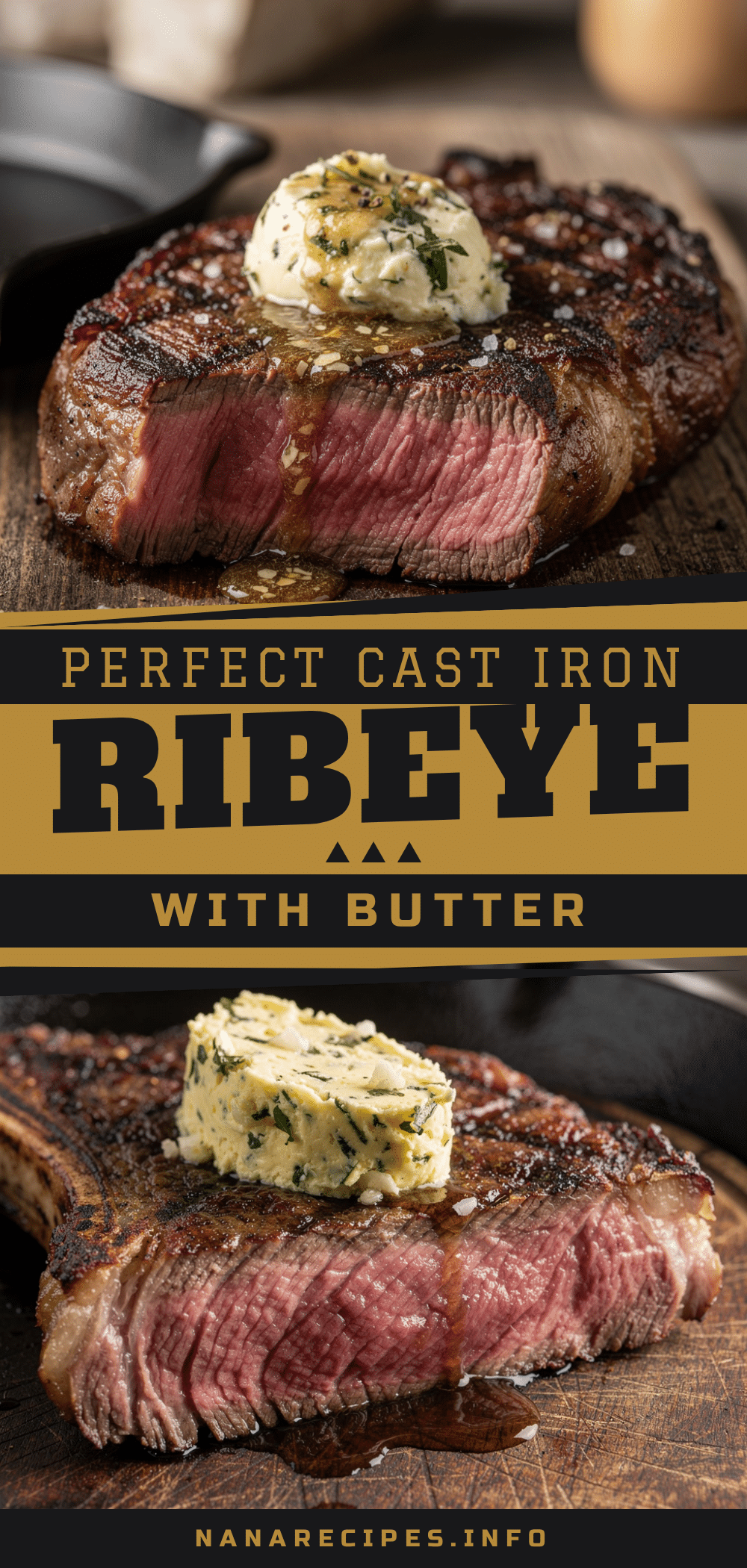
Perfect Cast Iron Reverse-Sear Ribeye Recipe with Easy Compound Butter
A simple and reliable reverse-sear ribeye steak recipe cooked in a cast iron skillet, topped with a silky herbaceous compound butter for a juicy, tender, and flavorful steakhouse-quality meal at home.
- Prep Time: 15-20 minutes
- Cook Time: 20-30 minutes
- Total Time: 45-50 minutes
- Yield: 1 serving 1x
- Category: Main Course
- Cuisine: American
Ingredients
- 1 thick-cut ribeye steak, about 1.5 to 2 inches thick (12–16 oz / 340–450 g)
- Kosher salt, for seasoning
- Freshly ground black pepper, for seasoning
- 4 tablespoons (about 57 g) unsalted butter, softened
- 1 teaspoon finely chopped fresh rosemary
- 1 teaspoon finely chopped fresh thyme
- 1 clove garlic, minced
- 1 tablespoon olive oil (or avocado oil for higher smoke point)
- Optional: pinch of smoked paprika or chili flakes for compound butter
Instructions
- Bring the ribeye steak to room temperature (15-20 minutes). Pat dry and season generously with kosher salt and freshly ground black pepper on both sides.
- Preheat the oven to 275°F (135°C). Place a wire rack on a baking sheet.
- Place the ribeye on the wire rack and cook in the oven for 20-30 minutes until the internal temperature reaches 115°F (46°C) for medium-rare, or adjust to your preferred doneness.
- While the steak cooks, prepare the compound butter by mixing softened unsalted butter with chopped rosemary, thyme, minced garlic, and smoked paprika if using. Set aside.
- Heat the cast iron skillet on high until very hot. Add olive oil and let it smoke.
- Sear the steak in the skillet for 1-2 minutes per side until a deep brown crust forms. Sear the edges for about 30 seconds each if desired.
- Transfer the steak to a cutting board and let it rest for 5-10 minutes to redistribute juices.
- Spoon a generous dollop of the compound butter over the warm steak and let it melt.
- Slice the steak against the grain and serve immediately.
Notes
Use a thermometer to monitor internal temperature for perfect doneness. Rest steak after searing to keep it juicy. Butter can be prepared ahead and refrigerated. For dairy-free, substitute butter with vegan margarine and olive oil with coconut oil. Adjust seasoning and herbs to taste.
Nutrition
- Serving Size: 1 ribeye steak (12-1
- Calories: 850
- Sodium: 400
- Fat: 65
- Saturated Fat: 28
- Carbohydrates: 1
- Protein: 53
Keywords: ribeye, reverse sear, cast iron skillet, steak recipe, compound butter, easy steak, dinner, comfort food