My neighbor Linda showed up at my door with a foil-wrapped loaf pan on a Tuesday. Not a special occasion, not a holiday—just a Tuesday. She said she’d been testing a lemon cake recipe and had one too many. I took it inside, half-expecting another dry loaf that would end up as breakfast toast. But when I cut into that thing later that night, the fork barely made a sound. It was dense but light, rich but bright, and that lemon flavor hit you right in the back of the jaw. I texted her immediately: “What is this magic?”
She laughed and said it was a ricotta cake she’d been tweaking for months. Ricotta in a cake. I’ll be honest, I was skeptical at first. Cheese and cake felt like a weird combo. But after the third slice (don’t judge), I understood. The ricotta gives it this incredible moistness that butter alone just can’t manage. It’s not greasy or heavy—it’s tender, almost creamy in texture, with a crumb that holds together perfectly. And the lemon? It cuts through the richness just enough to keep you coming back for one more bite.
I asked for the recipe, made it myself the next weekend, and immediately knew this was going to be a regular in my kitchen. It’s the kind of cake that works for everything—coffee with a friend, dessert after dinner, or just a quiet slice when nobody’s watching. This Best Lemon Ricotta Dessert Cake has become my go-to for so many reasons, and I’m pretty sure it’s about to become yours too.
Why You’ll Love This Recipe
I’ve tested this cake more times than I’d like to admit. The first few attempts were good, but something was always a little off—too dense, not lemony enough, or it sank in the middle. After about the fifth try, I finally nailed it. Here’s why this version works every single time:
- Incredibly Moist: The ricotta cheese keeps this cake tender for days. It doesn’t dry out like regular butter cakes.
- Bright Lemon Flavor: We’re using both zest and juice, so you get that fresh citrus punch in every bite—not just a hint.
- Simple Ingredients: No fancy extracts or hard-to-find items. You probably have most of this in your kitchen right now.
- No Mixer Required: You can whisk this together by hand. No need to drag out the stand mixer unless you want to.
- Perfect for Any Occasion: It’s fancy enough for a dinner party but simple enough for a Tuesday night craving.
- Crowd-Pleaser: I’ve brought this to brunches, potlucks, and family dinners. It disappears fast every single time.
What makes this different from other lemon cakes? It’s the texture. That ricotta creates a crumb that’s almost like a cross between a pound cake and a cheesecake. It’s rich without being heavy, and the lemon keeps everything bright and balanced. Honestly, it’s the kind of cake that makes people close their eyes after the first bite. And that’s not something I say lightly.
What Ingredients You Will Need
This recipe uses simple, everyday ingredients to create something that tastes anything but ordinary. The ricotta is the star here, so choosing the right one makes a real difference.
- Whole milk ricotta cheese (15 ounces or 425 grams) – Full-fat is non-negotiable here. The low-fat versions have too much water and will make your cake dense and wet. I prefer Galbani or Polly-O for consistent results.
- Granulated sugar (1 cup or 200 grams) – Regular white sugar works perfectly. It dissolves easily and gives the cake a nice tender crumb.
- Large eggs (3, room temperature) – Room temperature eggs blend into the batter much more smoothly. Cold eggs can make the batter seize up slightly.
- All-purpose flour (1 ½ cups or 190 grams) – Standard AP flour is all you need. No need for cake flour here—the ricotta does the tenderizing work.
- Baking powder (2 teaspoons) – Make sure it’s fresh. Old baking powder won’t give you the lift you need.
- Salt (½ teaspoon) – Balances the sweetness and enhances the lemon flavor.
- Fresh lemon zest (2 tablespoons, from about 2 large lemons) – This is where most of the lemon flavor comes from. Don’t skip it, and don’t use dried zest.
- Fresh lemon juice (3 tablespoons) – Adds that bright acidity that cuts through the richness of the ricotta.
- Vanilla extract (1 teaspoon) – Rounds out the flavor. Pure vanilla is best, but imitation works in a pinch.
- Unsalted butter (6 tablespoons or 85 grams, melted and slightly cooled) – Adds richness without making the cake greasy.
For the simple glaze:
- Powdered sugar (1 cup or 120 grams)
- Fresh lemon juice (2-3 tablespoons)
- Milk (1-2 teaspoons, if needed for consistency)
Equipment Needed
You don’t need a lot of fancy tools for this cake. That’s part of why I love making it so much.
- 9×5 inch loaf pan – Standard size works perfectly. If you use a slightly smaller pan, your cake will take a few extra minutes to bake.
- Parchment paper – Lining the pan makes removal so much easier. I never skip this step.
- Large mixing bowl – Any big bowl will do. I use a simple glass one.
- Whisk – A good whisk is better than a mixer here. It keeps the batter light.
- Rubber spatula – For scraping down the sides and folding everything together.
- Microplane or zester – A regular box grater works too, but a microplane gives you finer zest that distributes better.
- Cooling rack – Lets air circulate around the cake so it cools evenly.
- Toothpick or cake tester – For checking doneness. Wooden skewers work great too.
If you don’t have a microplane, just use the finest side of your box grater. It takes a little longer but works just fine. And if you don’t have a cooling rack, you can balance the pan on two upside-down ramekins. I’ve done it plenty of times.
Preparation Method
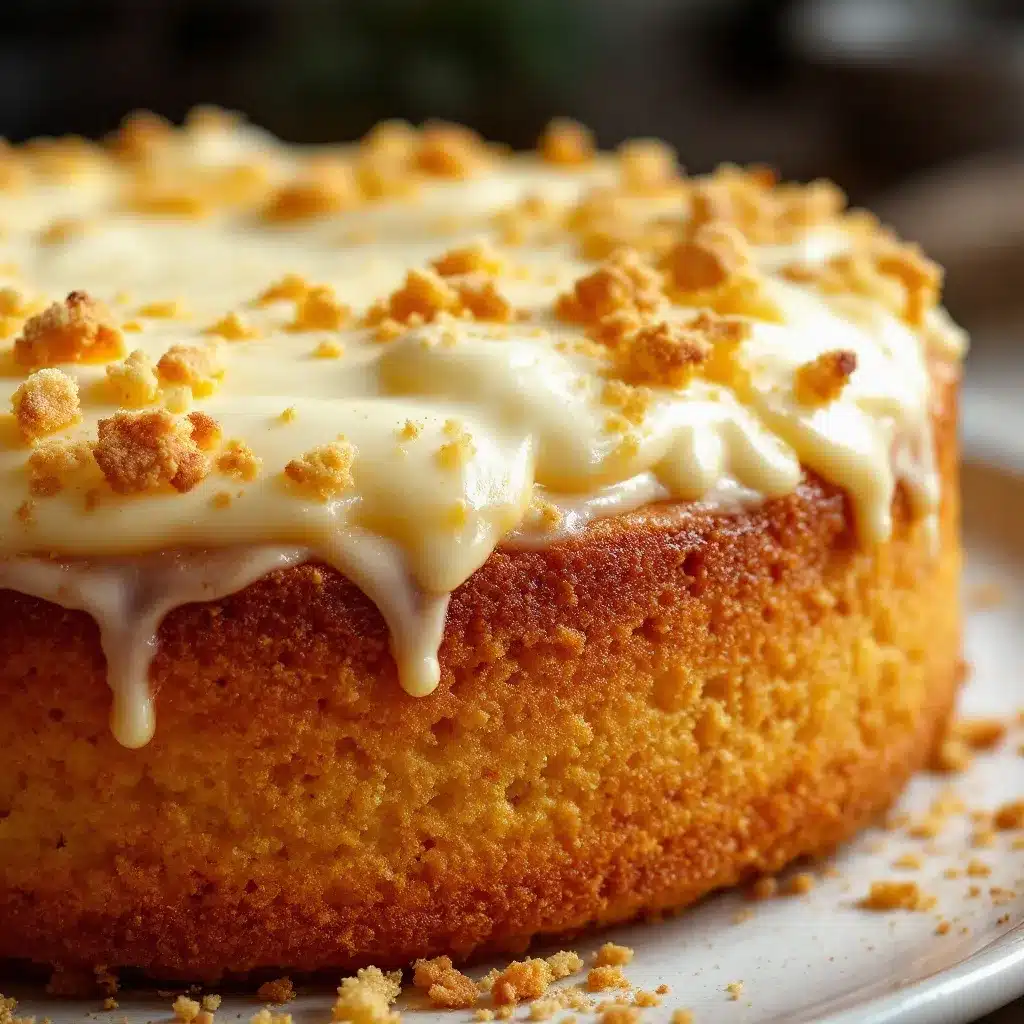
This comes together fast, so I like to have everything prepped before I start. It makes the whole process smoother and less stressful.
- Preheat your oven to 350°F (175°C). Position the rack in the center of the oven. While it’s heating, line your loaf pan with parchment paper, leaving some overhang on the long sides. Lightly grease the exposed ends with butter or non-stick spray.
- In a large bowl, whisk together the ricotta, sugar, and lemon zest. Really go at it for about a minute. You want the mixture to be smooth and well-combined. The sugar will start to dissolve and the zest will release its oils into the ricotta. This is where that incredible lemon aroma starts to happen.
- Add the eggs one at a time, whisking well after each addition. The batter should look thick and glossy at this point. Don’t rush this step—each egg needs to be fully incorporated before you add the next one.
- Pour in the melted butter, lemon juice, and vanilla extract. Whisk until everything is combined. The batter might look a little curdled or separated here, but that’s totally normal. The flour will bring it all together in the next step.
- In a separate small bowl, whisk together the flour, baking powder, and salt. This ensures the baking powder is evenly distributed throughout the flour. Nobody wants a pocket of baking powder in their cake.
- Add the dry ingredients to the wet ingredients. Use a spatula to fold them together gently. Stir just until you can’t see any more streaks of flour. A few small lumps are fine—overmixing will make the cake tough.
- Pour the batter into your prepared loaf pan. Smooth the top with your spatula. Give the pan a gentle tap on the counter to release any air bubbles.
- Bake for 50-60 minutes. Start checking at the 50-minute mark. The cake should be golden brown on top, and a toothpick inserted into the center should come out clean or with just a few moist crumbs. If the top is browning too quickly but the center isn’t done, tent the pan loosely with foil for the last 10-15 minutes.
- Let the cake cool in the pan for 15 minutes. Then use the parchment overhang to lift it out and transfer it to a cooling rack. Let it cool completely before adding the glaze—about 1 hour. If you glaze it while it’s still warm, the glaze will just soak right in and disappear.
- Make the glaze: Whisk together the powdered sugar and 2 tablespoons of lemon juice. Add more juice or a splash of milk until you get a thick but pourable consistency. Drizzle over the cooled cake and let it set for about 10 minutes before slicing.
Cooking Tips & Techniques
I’ve made enough mistakes with this cake to know exactly what to watch out for. Here are the things I wish I’d known from the start.
Don’t skip draining the ricotta. If your ricotta looks watery, dump it into a fine-mesh strainer set over a bowl and let it sit for 15-20 minutes. Too much liquid will make your cake dense and gummy. I learned this the hard way when my first cake came out more like a pudding.
Room temperature ingredients matter. Cold eggs and cold ricotta won’t blend as smoothly. They can cause the batter to separate or create a lumpy texture. Just leave everything on the counter for about 30 minutes before you start.
Use a light hand when mixing. Once you add the flour, stop stirring as soon as it comes together. Overmixing develops the gluten and gives you a tough, rubbery cake instead of that tender crumb we’re after.
Check your oven temperature. I’ve had ovens that run hot and ovens that run cold. An oven thermometer is cheap and takes the guesswork out of baking. If your cake is browning too fast on the outside but still raw in the middle, your oven is probably too hot.
Let it cool completely. I know it’s tempting to cut into it while it’s still warm, but the cake needs time to set. If you slice it too soon, it will fall apart and the texture will be gummy. Trust me on this one.
Variations & Adaptations
This recipe is pretty forgiving, and I’ve played around with it quite a bit. Here are some of my favorite variations.
Gluten-Free Version: Swap the all-purpose flour with a good 1:1 gluten-free baking flour. I’ve used Bob’s Red Mill with great results. The texture is slightly more delicate, so handle it gently.
Blueberry Lemon Ricotta Cake: Fold in 1 cup of fresh or frozen blueberries (tossed in a tablespoon of flour first so they don’t sink) right before pouring the batter into the pan. The berries burst and create little pockets of jammy goodness throughout the cake.
Orange Ricotta Cake: Replace the lemon zest and juice with orange zest and juice. Use about 3 tablespoons of orange zest and ¼ cup of orange juice. It’s a little sweeter and more mellow, perfect for people who find lemon too tart.
Almond Ricotta Cake: Add ½ teaspoon of almond extract along with the vanilla, and top the batter with a handful of sliced almonds before baking. The almonds toast up in the oven and add a lovely crunch.
Mini Loaves or Muffins: Divide the batter between mini loaf pans or a muffin tin. Mini loaves will bake in about 25-30 minutes, and muffins in 18-22 minutes. Great for gifting or portion control (if that’s your thing).
Serving & Storage Suggestions
This cake is wonderful on its own, but a few little extras can make it feel even more special.
Serving: I like to serve this at room temperature. The texture is at its best when it’s not straight from the fridge. A light dusting of powdered sugar on top looks beautiful, or you can add a dollop of whipped cream and some fresh berries for a more dessert-like presentation. It’s also fantastic with a cup of coffee or a glass of cold milk.
Storage: Keep the cake in an airtight container at room temperature for up to 3 days. If your kitchen is warm or humid, store it in the fridge—it will last about 5 days there. Just let it come back to room temperature before serving for the best texture.
Freezing: This cake freezes beautifully. Wrap it tightly in plastic wrap, then in foil, and freeze for up to 3 months. Thaw overnight in the fridge or on the counter for a few hours. I like to freeze individual slices for quick treats.
Reheating: If you want that just-baked warmth, pop a slice in the microwave for about 10-15 seconds. Or warm it in a 300°F oven for 5-7 minutes. The glaze will melt a little, but it’s still delicious.
Nutritional Information & Benefits
Here’s an approximate breakdown per slice (based on 10 slices):
- Calories: 290
- Fat: 14g
- Carbohydrates: 36g
- Protein: 8g
- Fiber: 1g
- Sugar: 24g
The ricotta cheese is a great source of protein and calcium, which makes this cake a little more satisfying than your average dessert. The lemon provides a good dose of vitamin C and adds brightness without extra sugar. While this isn’t a health food by any stretch, it’s a treat that feels a little less guilty than some other options.
If you’re watching your sugar intake, you can reduce the sugar in the cake to ¾ cup and skip the glaze entirely. The cake will still be plenty sweet and flavorful, just a little less decadent.
Conclusion
This Best Lemon Ricotta Dessert Cake is one of those recipes that just works. It’s simple enough for a beginner baker but impressive enough to serve to company. The ricotta gives it a texture you just can’t get with butter alone, and that bright lemon flavor makes every bite feel fresh and satisfying.
I love that I can throw this together in about 15 minutes with ingredients I usually have on hand. It’s become my default for last-minute guests, potluck invites, and those days when I just need a little something sweet. And honestly, it’s the kind of cake that makes you look like you tried way harder than you actually did.
If you make this, I’d love to hear how it turns out. Leave a comment below and let me know if you tried any variations or if it became a favorite in your house too. And if you’re looking for more easy dessert inspiration, you might enjoy this easy one-bowl apple cider donut loaf cake or these fudgy zucchini brownies. Happy baking!
Frequently Asked Questions
Can I use part-skim ricotta instead of whole milk?
You can, but the cake won’t be as moist and tender. Part-skim ricotta has more water content, which can make the texture denser and slightly gummy. If that’s all you have, drain it well before using.
Why did my cake sink in the middle?
This usually happens if the oven temperature is too low, the baking powder is old, or the batter was overmixed. Make sure your oven is properly preheated and your baking powder is fresh (less than 6 months old).
Can I make this cake dairy-free?
It’s tricky because ricotta is such a key ingredient. You could try a dairy-free ricotta alternative, but I haven’t tested it myself. The texture and flavor will definitely be different. If you try it, let me know how it goes!
How do I know when the cake is done?
Insert a toothpick or cake tester into the center. If it comes out clean or with just a few moist crumbs, it’s done. The top should be golden brown and the edges should be pulling away slightly from the pan.
Can I double this recipe?
Absolutely. Double all the ingredients and bake in a 10-inch bundt pan or two loaf pans. The baking time will be similar, but start checking at 45 minutes. A bundt pan usually takes about 55-65 minutes.
Pin This Recipe!
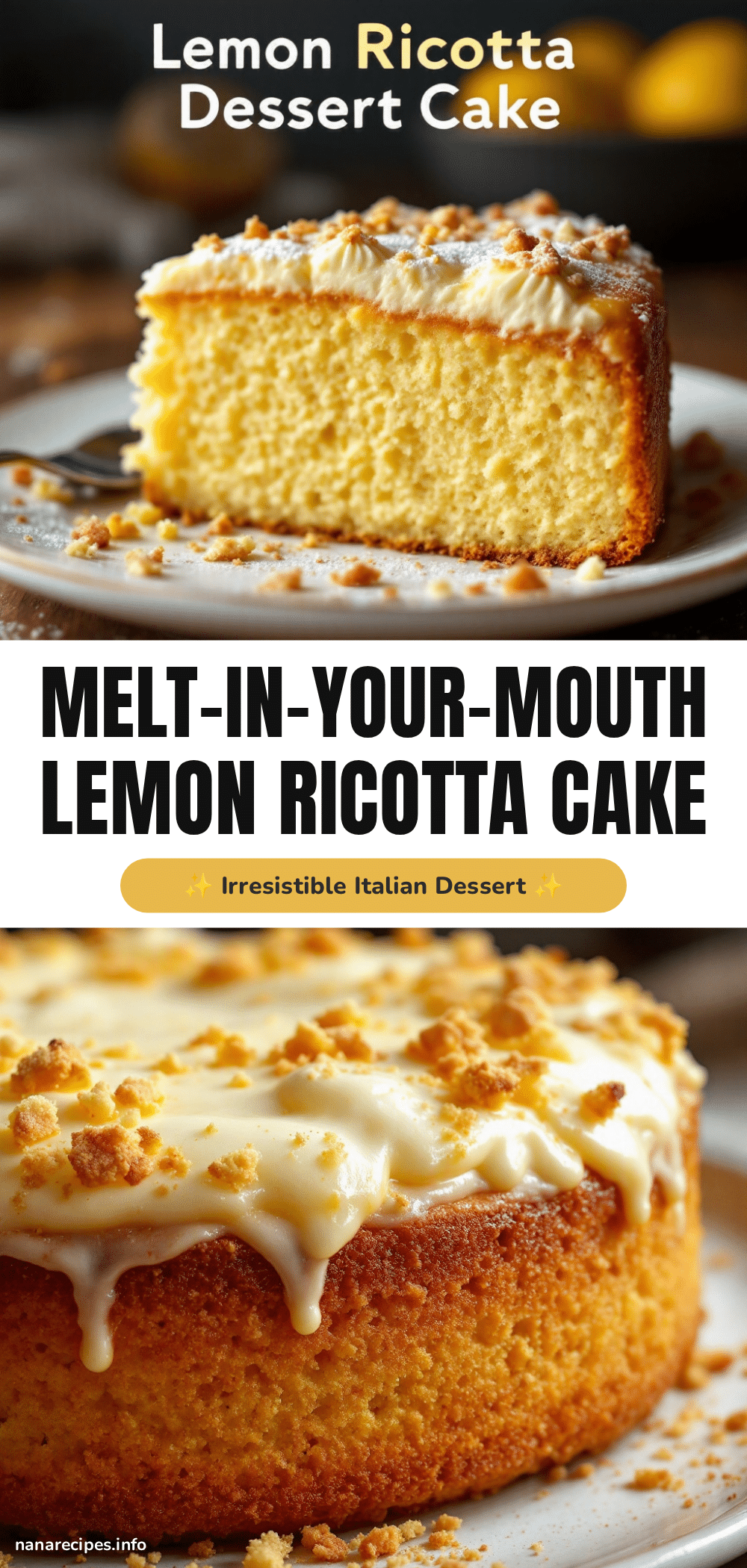
Best Lemon Ricotta Dessert Cake Recipe – Easy Homemade
This incredibly moist and tender lemon ricotta cake is bursting with bright citrus flavor. Made with simple ingredients and no mixer required, it’s perfect for any occasion from a casual Tuesday night to an elegant dinner party.
- Prep Time: 15 minutes
- Cook Time: 55 minutes
- Total Time: 1 hour 10 minutes
- Yield: 10 servings 1x
- Category: Dessert
- Cuisine: Italian-American
Ingredients
- 15 ounces (425 grams) whole milk ricotta cheese
- 1 cup (200 grams) granulated sugar
- 3 large eggs, room temperature
- 1 ½ cups (190 grams) all-purpose flour
- 2 teaspoons baking powder
- ½ teaspoon salt
- 2 tablespoons fresh lemon zest (from about 2 large lemons)
- 3 tablespoons fresh lemon juice
- 1 teaspoon vanilla extract
- 6 tablespoons (85 grams) unsalted butter, melted and slightly cooled
- 1 cup (120 grams) powdered sugar
- 2–3 tablespoons fresh lemon juice (for glaze)
- 1–2 teaspoons milk (for glaze, if needed)
Instructions
- Preheat your oven to 350°F (175°C). Position the rack in the center of the oven. Line a 9×5 inch loaf pan with parchment paper, leaving overhang on the long sides. Lightly grease the exposed ends with butter or non-stick spray.
- In a large bowl, whisk together the ricotta, sugar, and lemon zest for about a minute until smooth and well-combined.
- Add the eggs one at a time, whisking well after each addition until the batter is thick and glossy.
- Pour in the melted butter, lemon juice, and vanilla extract. Whisk until combined. The batter may look slightly curdled; this is normal.
- In a separate small bowl, whisk together the flour, baking powder, and salt.
- Add the dry ingredients to the wet ingredients. Use a spatula to fold together gently until just combined. Do not overmix; a few small lumps are fine.
- Pour the batter into the prepared loaf pan. Smooth the top with a spatula. Tap the pan gently on the counter to release air bubbles.
- Bake for 50-60 minutes, starting to check at 50 minutes. The cake should be golden brown and a toothpick inserted into the center should come out clean or with a few moist crumbs. If browning too quickly, tent loosely with foil for the last 10-15 minutes.
- Let the cake cool in the pan for 15 minutes. Then use the parchment overhang to lift it out and transfer to a cooling rack. Cool completely before glazing (about 1 hour).
- Make the glaze: Whisk together the powdered sugar and 2 tablespoons of lemon juice. Add more juice or a splash of milk until you get a thick but pourable consistency. Drizzle over the cooled cake and let set for about 10 minutes before slicing.
Notes
For best results, use full-fat ricotta and drain if watery. Room temperature ingredients blend more smoothly. Do not overmix once flour is added. Let cake cool completely before glazing. Store in an airtight container at room temperature for up to 3 days, or refrigerate for up to 5 days. Freezes well for up to 3 months.
Nutrition
- Serving Size: 1 slice
- Calories: 290
- Sugar: 24
- Sodium: 220
- Fat: 14
- Saturated Fat: 8
- Carbohydrates: 36
- Fiber: 1
- Protein: 8
Keywords: lemon ricotta cake, lemon cake, ricotta cake, easy lemon cake, moist lemon cake, Italian cake, dessert cake