Introduction
“You’re not seriously going to try and make dinner after that meeting, right?” my roommate called from the couch, waving her phone like it was a lifeline. I glanced at the clock—7:15 p.m., and all I had was a tired brain and a sad, half-empty fridge. Honestly, the idea of ordering takeout was tempting, but something in me wanted to whip up something homey and fast. That’s when this recipe for quick savory Korean ground beef rice bowls popped into my head.
This dish wasn’t always my go-to. At first, I was skeptical about combining the punchy flavors of gochujang and soy sauce with simple ground beef and rice. But one hurried weeknight, I threw it together with whatever I had on hand, and well—let’s just say it stuck around on my weekly rotation since then. The sizzle of the beef in the pan, the aroma of garlic and ginger mingling with the savory-sweet sauce—it felt like a mini celebration in a bowl, even on the most chaotic evenings.
What really sold me? The way the flavors balanced perfectly without a ton of fuss, and how you could throw it together in about 20 minutes flat. It’s the kind of recipe that feels like a warm hug after a hectic day. I find myself coming back to it when I want something comforting but don’t have the patience for complicated cooking. Honestly, it’s more than just a meal—it’s a little reset button.
So, if you’re juggling work, family, or just plain tired of the same old dinners, this Korean ground beef rice bowl might just be your new best friend.
Why You’ll Love This Recipe
After making these Korean ground beef rice bowls more times than I can count, I can confidently say this recipe nails the perfect balance of flavor and ease. Here’s why it’s such a winner:
- Quick & Easy: Ready in under 20 minutes, making it ideal for busy weeknights or when you need a fast, satisfying meal.
- Simple Ingredients: Uses pantry staples and common fresh items—nothing exotic or hard to find.
- Perfect for Any Occasion: Whether it’s a casual dinner, a quick lunch, or even a potluck, it fits the bill.
- Crowd-Pleaser: Kids and adults alike love the savory, slightly spicy flavor combo.
- Unbelievably Delicious: The sauce is sweet, salty, and a bit spicy, all wrapped up in tender ground beef that’s just bursting with flavor.
This isn’t just another ground beef recipe. The secret lies in the perfectly balanced seasoning—think soy sauce, a hint of brown sugar, and a touch of gochujang for that authentic Korean kick. Plus, adding fresh ginger and garlic gives it a vibrant freshness that cuts through the richness.
In my kitchen, it’s the kind of dish that makes me pause mid-bite, close my eyes, and savor the moment. It’s comfort food that’s fast, fuss-free, and totally crave-worthy. And honestly, it’s a great way to impress guests without sweating it in the kitchen.
What Ingredients You Will Need
This recipe uses simple, wholesome ingredients to deliver bold flavor and a satisfying texture without any hassle. Most are pantry staples or easy to find, and you can tweak a few things based on what you have.
- Ground Beef (85% lean, about 1 pound / 450 grams): The star protein here. I prefer leaner beef to avoid excess grease but still keep it juicy.
- Cooked White or Brown Rice (3 cups / 720 ml): The base—leftover rice works perfectly, which saves time!
- Soy Sauce (1/4 cup / 60 ml): Look for low-sodium if you want to keep salt in check. I like Kikkoman for consistency.
- Gochujang (Korean chili paste, 2 tablespoons): Adds heat and depth. Use less if you’re spice-averse or swap for a mild chili paste.
- Brown Sugar (1 tablespoon): Balances the savory and spicy notes with a touch of sweetness.
- Garlic (3 cloves, minced): Fresh is best—adds essential aromatic punch.
- Fresh Ginger (1 tablespoon, grated): Brightens the sauce and adds warmth.
- Sesame Oil (1 teaspoon): For that nutty, toasty finish. You can find this in most grocery stores or Asian markets.
- Green Onions (2, sliced): Fresh garnish that adds crunch and mild onion flavor.
- Sesame Seeds (1 tablespoon): Optional, for garnish and a little extra texture.
- Vegetables (optional): I sometimes add shredded carrots or steamed broccoli for color and nutrients.
If you want a gluten-free version, swap the soy sauce with tamari. For dairy-free, this recipe is naturally free of dairy, so no worries there. I’ve also tried swapping ground beef for ground turkey or chicken, which works fine but changes the richness a bit.
Equipment Needed
- Large Skillet or Nonstick Pan: Essential for browning the ground beef evenly without sticking. I use a heavy-bottomed skillet that retains heat well.
- Rice Cooker or Pot: For cooking your rice if you don’t have leftovers. A rice cooker is handy but not required.
- Grater or Microplane: To finely grate fresh ginger—this really makes a difference in the sauce.
- Measuring Spoons and Cups: For accurate seasoning, especially with soy sauce and gochujang.
- Wooden Spoon or Spatula: Preferably heat-resistant for stirring the beef and sauce.
If you don’t have a grater, finely mincing ginger with a sharp knife works, too. For those on a budget, any good nonstick pan will do—no need for fancy cookware here. Keeping your pan well-seasoned helps prevent sticking and makes cleanup easier.
Preparation Method
- Prepare the Rice: Cook 3 cups (720 ml) of white or brown rice according to package instructions, or use leftover rice. Leftover rice tends to be drier and works better for this dish. This usually takes about 15-20 minutes.
- Mix the Sauce: In a small bowl, combine 1/4 cup (60 ml) soy sauce, 2 tablespoons gochujang, 1 tablespoon brown sugar, 1 teaspoon sesame oil, minced garlic, and grated ginger. Stir well until the sugar dissolves and the mixture is smooth. This step takes about 3 minutes.
- Cook the Ground Beef: Heat a large skillet over medium-high heat. Add the ground beef (1 pound / 450 grams) and cook, breaking it up with a wooden spoon, until browned and cooked through—about 6-8 minutes. Drain excess fat if desired, but leaving a bit adds flavor.
- Add the Sauce to the Beef: Pour the sauce mixture over the cooked beef in the skillet. Stir well to coat evenly. Reduce heat to medium and let it simmer for 2-3 minutes, allowing the flavors to meld together and sauce to thicken slightly.
- Prepare Optional Veggies: If adding vegetables like shredded carrots or steamed broccoli, prepare them while the beef simmers. Tossing them right into the bowl adds freshness and texture.
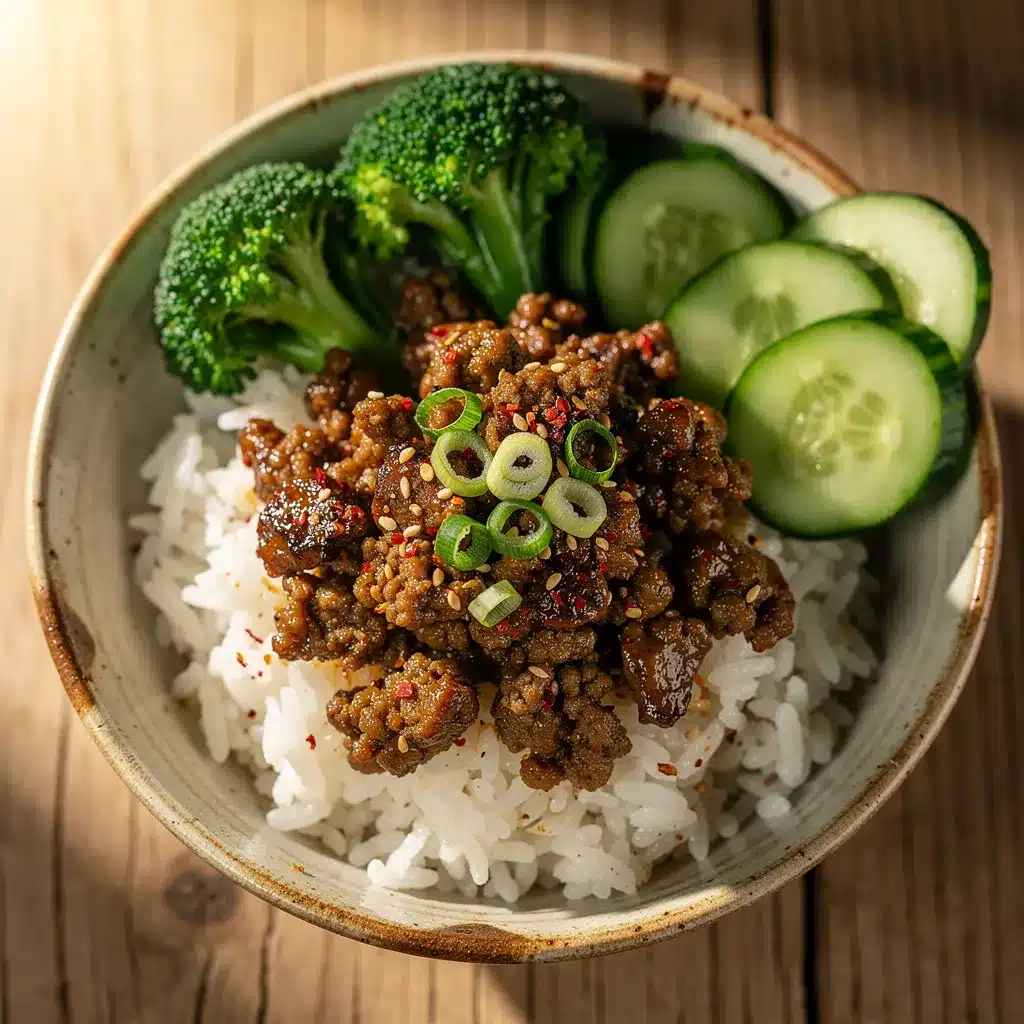
- Assemble the Bowls: Spoon warm rice into bowls, top generously with the savory Korean ground beef mixture, and garnish with sliced green onions and a sprinkle of sesame seeds.
- Final Touches: Give each bowl a quick drizzle of extra sesame oil or a squeeze of lime if you want a little brightness. Serve immediately.
Watch out for overcooking the beef—it should stay tender and juicy, not dry. If your sauce seems too thick, add a splash of water or broth to loosen it. The aroma at step 4 is a good sign the flavors are coming together—garlic, ginger, and the savory-sweet sauce should fill your kitchen.
Cooking Tips & Techniques
When cooking the ground beef, don’t rush the browning process. Let the meat sit undisturbed for a minute or two at a time to get that nice caramelized crust—this adds a deep, savory note that makes all the difference. I’ve learned the hard way that constantly stirring keeps the beef pale and less flavorful.
Another tip is to finely mince the garlic and grate the ginger fresh. Pre-minced garlic in jars can work in a pinch but lacks the punch of fresh. Also, if you’re new to gochujang, start with 1 tablespoon and adjust to taste; it’s spicy but also sweet and tangy, so it’s key to balance.
Multitasking is your friend here. While the rice cooks, prep your sauce and veggies so everything comes together quickly. I often steam broccoli or snap peas during the last few minutes of cooking the beef, so nothing gets cold waiting.
For consistent results, measure out your sauce ingredients precisely, especially the soy sauce and sugar. Too much soy can overpower, and too little sugar makes it flat. I keep a small bottle of toasted sesame oil handy—it’s potent, so a little goes a long way to finish the dish.
Variations & Adaptations
You can easily tweak this recipe to suit different dietary needs or flavor preferences:
- Low-Carb Version: Swap the rice for cauliflower rice or shredded cabbage stir-fried lightly for a grain-free option.
- Vegetarian Adaptation: Use crumbled tempeh or firm tofu in place of ground beef. Cook with the same sauce for a plant-based twist.
- Spice Level Adjustment: For a milder dish, reduce the gochujang to 1 tablespoon or substitute with a mild chili paste. For more heat, add a pinch of red pepper flakes or drizzle with chili oil.
- Seasonal Veggies: In spring or summer, toss in fresh cucumber slices or shredded radish for crunch. Fall and winter calls for steamed kale or roasted sweet potatoes.
- Personal Favorite: I sometimes stir in a beaten egg at the end of cooking the beef, letting it scramble gently for extra richness and texture.
Serving & Storage Suggestions
These Korean ground beef rice bowls are best served hot, straight from the pan to the table, but they also hold up well for leftovers. I like to serve mine with a side of kimchi or quick pickled cucumbers to cut through the richness.
For storage, pack the beef and rice separately in airtight containers to keep the textures fresh. Refrigerate for up to 3 days. When reheating, sprinkle a little water over the rice and cover loosely to keep it moist; microwave or rewarm gently on the stovetop.
Flavors actually deepen overnight, so if you can wait, the next day’s meal tastes even better. Just add fresh green onions and sesame seeds before serving to brighten things back up.
Nutritional Information & Benefits
This recipe offers a balanced meal with protein from the ground beef, carbohydrates from the rice, and a good dose of vitamins and antioxidants from garlic and ginger. A typical serving contains approximately 450-500 calories, with about 25 grams of protein and moderate fat content depending on beef leanness.
The inclusion of gochujang adds capsaicin, which may help with metabolism, while sesame oil provides heart-healthy fats. For those watching sodium, opting for low-sodium soy sauce helps keep salt levels in check.
Overall, it’s a satisfying dish with a comforting yet nutritious profile, ideal for anyone seeking a quick homemade dinner that doesn’t compromise on flavor or wholesomeness.
Conclusion
Quick savory Korean ground beef rice bowls have become one of those dishes I turn to when I need something fast, flavorful, and fuss-free. The way the sauce clings to the tender beef, paired with fluffy rice and fresh garnishes, always hits the spot—whether I’m cooking for one or feeding friends.
Feel free to play around with the ingredients and spice levels to match your taste or dietary needs. Honestly, the simplicity of this recipe makes it a perfect canvas for your own culinary creativity.
Next time you’re staring down a hungry evening with little time to spare, give this one a shot—you might find it becomes your secret weapon for easy weeknight dinners.
FAQs
Can I make this recipe ahead of time?
Absolutely! You can prepare the beef mixture and rice separately and store them in the fridge for up to 3 days. Reheat gently before serving.
What can I substitute for gochujang if I don’t have it?
You can use a combination of miso paste and a bit of chili garlic sauce or sriracha for a similar sweet-spicy flavor, though it won’t be exactly the same.
Is this recipe suitable for meal prep?
Yes, it’s great for meal prep. Portion into containers with rice and beef, add fresh toppings before eating, and you’ve got a quick lunch or dinner ready to go.
Can I use other meats instead of ground beef?
Ground pork, turkey, or chicken all work well. Adjust cooking times as needed, and keep in mind that leaner meats may need a touch more oil to stay moist.
How spicy is this dish?
The spice level depends on how much gochujang you use. The recipe as written has a mild to medium heat, but you can adjust it up or down to suit your preference.
Pin This Recipe!
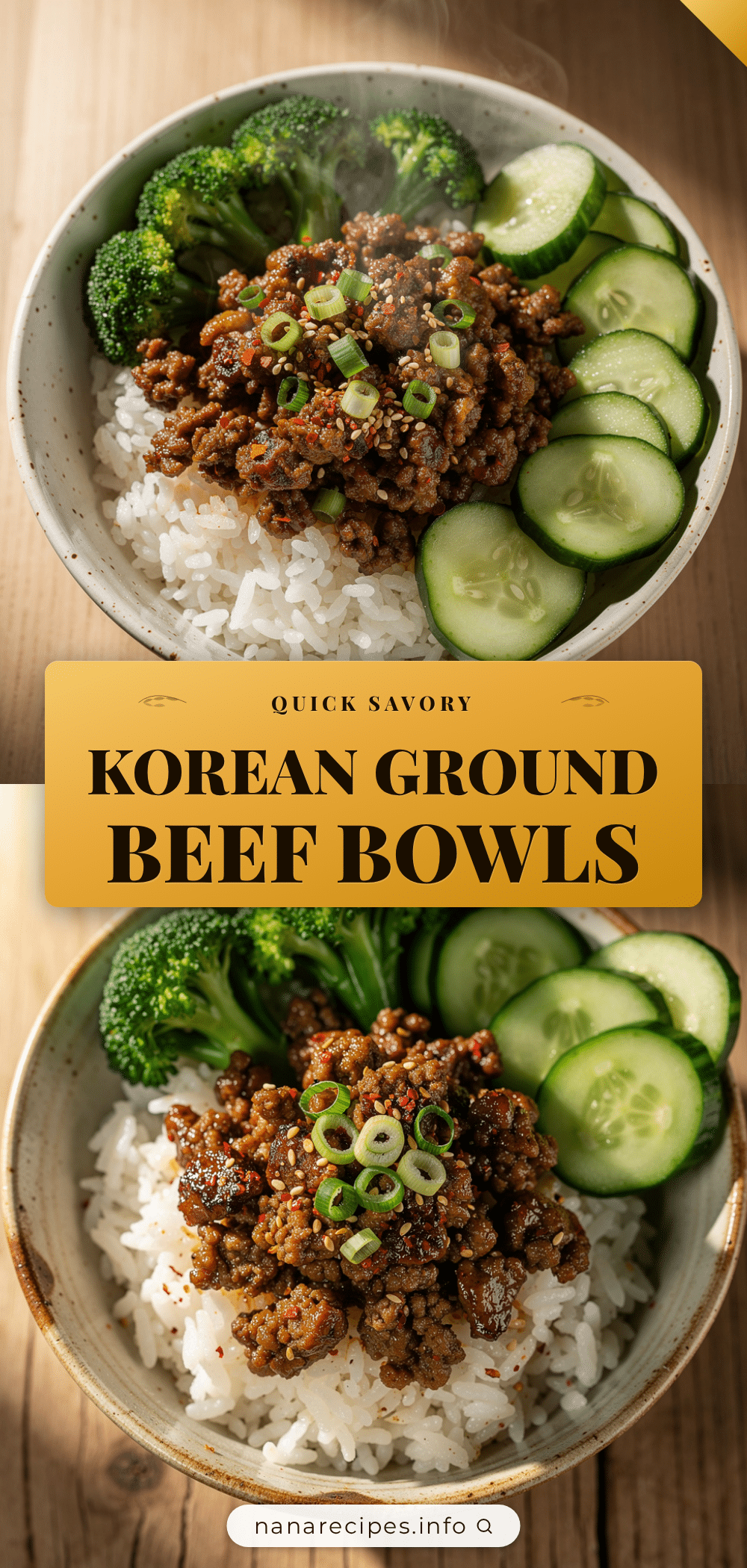
Quick Savory Korean Ground Beef Rice Bowls
A fast and flavorful Korean-inspired ground beef rice bowl recipe ready in about 20 minutes, perfect for busy weeknights or quick dinners.
- Prep Time: 5 minutes
- Cook Time: 15 minutes
- Total Time: 20 minutes
- Yield: 4 servings 1x
- Category: Main Course
- Cuisine: Korean
Ingredients
- 1 pound (450 grams) ground beef (85% lean)
- 3 cups (720 ml) cooked white or brown rice
- 1/4 cup (60 ml) soy sauce (low-sodium preferred)
- 2 tablespoons gochujang (Korean chili paste)
- 1 tablespoon brown sugar
- 3 cloves garlic, minced
- 1 tablespoon fresh ginger, grated
- 1 teaspoon sesame oil
- 2 green onions, sliced
- 1 tablespoon sesame seeds (optional)
- Optional vegetables: shredded carrots or steamed broccoli
Instructions
- Cook 3 cups of white or brown rice according to package instructions or use leftover rice.
- In a small bowl, combine soy sauce, gochujang, brown sugar, sesame oil, minced garlic, and grated ginger. Stir until sugar dissolves and mixture is smooth.
- Heat a large skillet over medium-high heat. Add ground beef and cook, breaking it up with a wooden spoon, until browned and cooked through, about 6-8 minutes. Drain excess fat if desired.
- Pour the sauce mixture over the cooked beef in the skillet. Stir well to coat evenly. Reduce heat to medium and simmer for 2-3 minutes until flavors meld and sauce thickens slightly.
- Prepare optional vegetables like shredded carrots or steamed broccoli while beef simmers.
- Spoon warm rice into bowls, top with the Korean ground beef mixture, and garnish with sliced green onions and sesame seeds.
- Optionally drizzle extra sesame oil or squeeze lime over the bowls before serving. Serve immediately.
Notes
Use low-sodium soy sauce to control salt levels. For gluten-free, substitute soy sauce with tamari. Freshly grate ginger and mince garlic for best flavor. Avoid overcooking beef to keep it tender and juicy. Leftover rice works best as it is drier. Adjust gochujang amount to control spice level. Optional vegetables add color and nutrients. Store beef and rice separately for best texture when reheating.
Nutrition
- Serving Size: 1 bowl (approximatel
- Calories: 475
- Sugar: 7
- Sodium: 700
- Fat: 22
- Saturated Fat: 8
- Carbohydrates: 40
- Fiber: 2
- Protein: 25
Keywords: Korean ground beef, quick dinner, rice bowl, gochujang, easy weeknight meal, savory beef bowl